
Home
Operational AI Overflow Detection Contamination Detection Service Verification
Fleet Safety Dash-Cam MDVRs Storage Birds Eye 360
Cloud Platform Cloud Dashboard Cloud Log-In
Contact / Info Contact Us Case Studies
Request a Demo →
WasteVision Contamination Detection
AIWasteVision AI — Contamination Detection

Cleaner Loads. Lower Costs. Zero Driver Distraction.

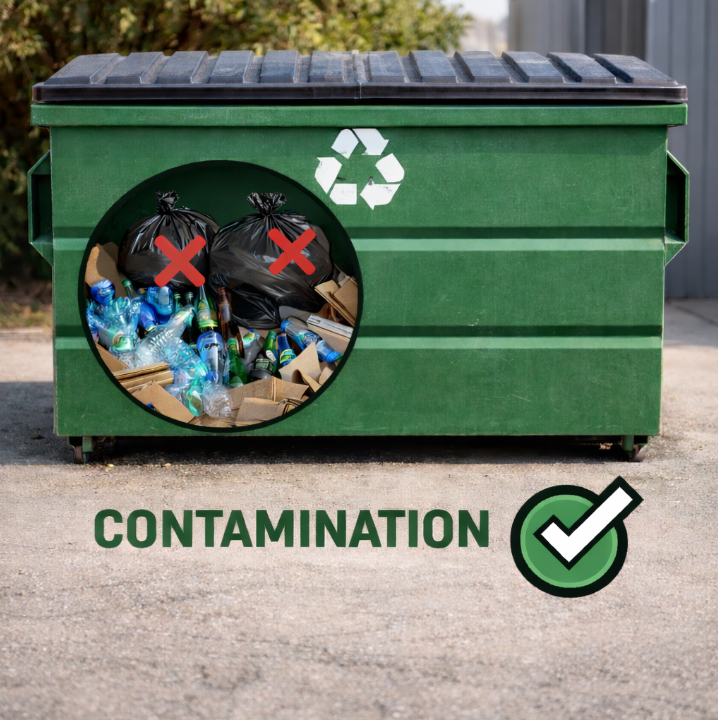
WasteVision’s AI-powered contamination detection identifies contaminants at the hopper in real time, ties every event to the generator address, and gives haulers and municipalities the data they need to educate, enforce, and reduce MRF costs — all without the driver lifting a finger.


$3.5B+
Annual U.S. cost of recycling contamination
25%
Of items in recycling bins aren’t actually recyclable
$50–$100
Per-ton penalty fee for contaminated loads at the MRF
More events captured vs. depending on drivers

Contamination Is Costing You More Than You Think

Contaminated recycling loads create a chain reaction of cost, inefficiency, and environmental harm that impacts every stakeholder in the waste stream.

MRF LANDFILL $ $ $ $

Rejected Loads at the MRF

When contamination exceeds thresholds, the MRF refuses the load entirely — redirecting it to the landfill at significant added cost.

$
$
$
$
$

Wasted Time & Fuel

Rerouting a rejected load to the landfill wastes driver time, adds fuel costs, and increases vehicle wear — all unrecoverable expenses.

WASTEVISION AI 0 LIFTS FLAGGED vs DRIVER 0 LIFTS FLAGGED 5× MORE

Depending on Drivers to Flag Contamination Is Ineffective

Requiring drivers to monitor lifts on an in-cab display and manually flag contamination events is inefficient, ineffective, and unsafe — forcing them to take their eyes off the road during active collection.

25% 20% 15% 10% 5% Goal Actual

Missed Sustainability Goals

Without contamination data, municipalities can’t measure, report, or improve recycling purity — undermining zero-waste commitments.

Fully Automated. No Driver Interaction.

WasteVision uses your existing on-board fleet safety cameras to analyze the recycling stream at the moment of collection. The driver concentrates on driving safely — the AI does the rest.

1
Camera Captures the Load

On-board cameras automatically photograph the recycling stream as it enters the hopper during collection.

2
AI Detects Contaminants

WasteVision’s AI models identify bags, styrofoam, construction debris, yard waste, and other prohibited materials in milliseconds.

3
Event Tied to the Generator

Using Modern Service Verification, the contamination event is tied back to the specific bin address with geo-location and photographic evidence.

4
Educate or Enforce

Haulers and municipalities use the documented evidence to send educational outreach, issue warnings, or apply fines to repeat offenders.

♻️ Contamination Detection · Route
LIVE
Bins Serviced
0
total lifts
Contaminated Bins
0
detected
% Contaminated
0%
of all serviced
1+ Bags / Bin
0
most common
Contamination Breakdown
1+ Bags / Bin
0
Yard Waste
0
Styrofoam
0
Construction
0
Rate vs Target (<10%) 0% ⚠

Multiple Models. Multiple Contaminants Covered.

WasteVision has developed purpose-built AI models to detect the most prevalent and costly forms of recycling contamination.

Black Trash Bag

Bags in Recycling Stream

The single biggest culprit of recycling contamination. WasteVision detects bagged recyclables entering the hopper — the contaminant most MRFs cite as the primary cause of load rejection and equipment damage.

Styrofoam Detection

Expanded polystyrene (EPS) is non-recyclable in most curbside programs and contaminates entire bales. Our AI identifies styrofoam pieces and packaging before they reach the MRF.

Construction Materials

Construction Materials

Wood, drywall, concrete, and other C&D debris damage MRF sorting equipment and create costly processing shutdowns. WasteVision catches these heavy contaminants at collection.

🌿

Yard Waste Detection

Grass clippings, branches, and organic yard waste contaminate recycling bales and reduce material value. Our AI identifies organic contaminants mixed into the recycling stream.

Built for Haulers and Municipalities

Two distinct audiences. One powerful platform. WasteVision contamination detection delivers ROI to private haulers and government entities alike.

🚛

Private & Independent Haulers

Haulers use contamination detection to protect margins, reduce MRF penalties, and win competitive bids.

  • Limit contaminants within a load to avoid costly MRF rejection fees and landfill rerouting
  • Submit stronger RFP responses to municipalities that now mandate contamination detection technology
  • Outperform competitors still depending on drivers to capture contamination events — an approach that is ineffective, inefficient, and unsafe
  • Use documented contamination data to educate or fine repeat-offending generators
  • Reduce overall disposal costs by keeping recycling streams cleaner at the source
🏛️

Municipalities & Government Entities

Municipalities use contamination detection to meet sustainability goals, educate residents, and reduce program costs.

  • Meet standards and goals set by Public Works to create a cleaner environment and reduce landfill dependency
  • Educate the community on how to recycle correctly with targeted, address-specific outreach
  • Advance zero-waste goals with measurable contamination reduction data over time
  • Decrease costs at the MRF by reducing contaminated material delivered to the facility
  • Send postcards or emails to generators with images of contaminants, bin photo, and geo-location tied to their address

Automated Outreach That Drives Behavior Change

📬

Generator Education — Postcards & Emails

When a contamination event occurs, WasteVision provides the municipality or hauler with everything needed to educate the responsible generator: a photograph of the contaminants at the hopper, a picture of the bin with geo-location, and the specific address it ties back to. This data is used to send postcards or emails directly to the generator with information on how to recycle correctly — all without any manual effort.

📸 Bin Image 🗑️ Hopper Image 📍 GPS + Address ✉️ Email Option 📬 Postcard Delivery 📊 Repeat Offender Tracking

The WasteVision Contamination Detection Advantage

📍

Generator Attribution

Every contamination event is tied to the specific bin address through Modern Service Verification — identifying exactly which generator is responsible.

📸

Two-Image Evidence Chain

Captures the bin before pickup and the contamination at the hopper — a documented chain of evidence linked to GPS, timestamp, and address.

📊

Organized, Usable Reports

WasteVision generates structured contamination reports for haulers — organized by route, generator, contaminant type, and frequency — so data is actionable, easy to access, and ready for operational decision-making.

🔗

Open API — ERP Integration

Our open API platform integrates directly with your existing ERP and billing systems, so contamination data flows seamlessly into the tools your team already uses — no silos, no manual data entry, no extra steps.

🚨

Repeat Offender Tracking

The WasteVision platform tracks the number of contamination infractions per generator, making it easy for haulers to enforce a three-strike rule — which can result in fines or termination of service for repeat offenders.

Ready to Clean Up Your Recycling Stream?

Discover how WasteVision’s AI-powered contamination detection can reduce MRF costs, meet sustainability goals, and deliver actionable intelligence from every route — starting today.

Contamination Detection by WasteVision